| Home || Story Index || Links || China || Japan || OZ/NZ || Nepal || South Pole || Air || Snow || Water || Earth ||| RSS

Photography: Assignment - Expedition Documentation - Stock Images - Fine Prints - Product Lifestyle/Marketing

Getting to the South Pole
South Pole, Antarctica, AQ
27 October 2005

Deplaning in Antarctica

Mine may well have been one of the fastest trips to the South Pole. Amundsen, who led the first party to reach the South Pole ever in 1911, took 15 months and 9 days from Norway via ship and dog sled. Byrd got to the South Pole by ship and by plane in 15 months and 3 days (he had a particularly slow ship hauling his plane and, like most, dealt with weather delays).

Just as these explorers piggy-backed on the transportation technologies of their day, I did, too. My trip from the US to the South Pole made use of the most modern of aircraft and took me 69 hours - not quite three days.

Three days is an impressively short time to get to the pole. Most trips involve some sort of delay, if not many delays as they compound upon each other. The first leg - a flight from Los Angeles to Christchurch, New Zealand - is pretty straight forward. What Antarctic travelers truly dread is when their flight on the military C-17 Globemaster III aircraft from Christchurch to McMurdo Station on the Antarctic coast "boomerangs." They get part way, if not all the way (5 hours), to McMurdo only to find the conditions are too poor to land, "boomeranging" them back to Christchurch to await better weather.

Full Story


Working at the South Pole
South Pole, Antarctica, AQ
07 November 2005

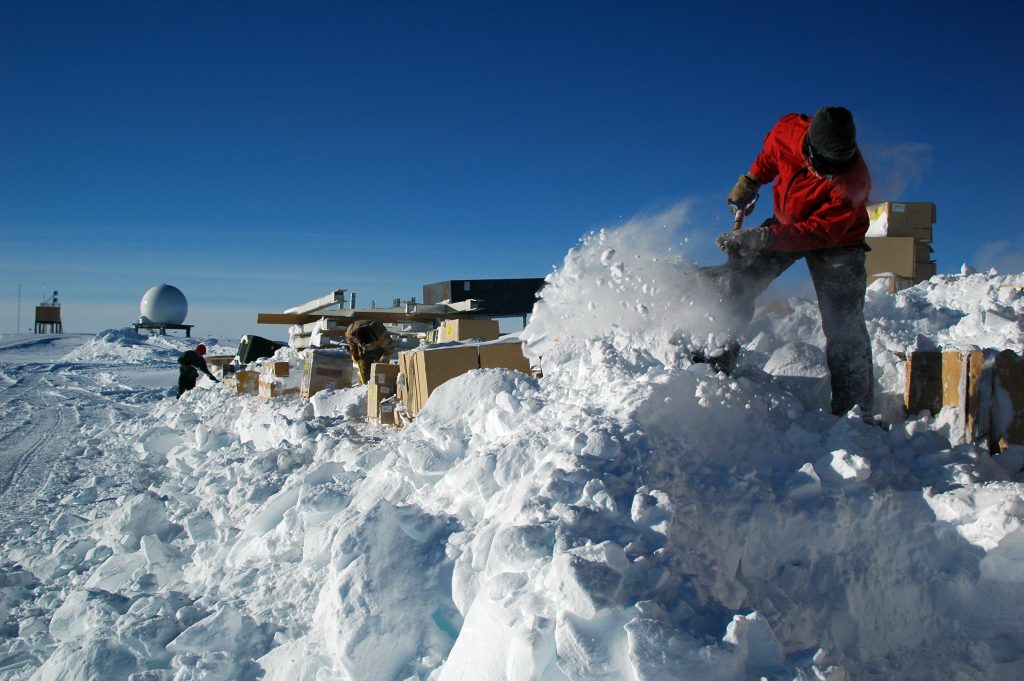
Tony uncovers the lost treasure

I was told when I applied for the job that there would be a lot of snow shoveling, especially for the first month. There was really no way for me to totally understand what that meant.

For the past week I have shoveled snow at least five hours a day. Most days it's been eight or nine hours — my entire shift. On Thursday, after a solid nine hours of shoveling, it felt so amazing to just lay down, in all of my ECW (extreme cold weather) gear and do nothing. The risk in that is falling asleep and missing dinner which would be very bad. By about day two, my appetite picked up and I've been eating mounds of food at each meal. Fortunately food is part of the deal here so it's all free (so to speak).

Oh, did I mention we're at over 3,000m (10,000 ft.) here? We're sitting on a glacier that's over 3km (2.5 miles) thick, so the air is relatively thin. Mountaineers figure acclimatization at about 300m (1,000 ft) per day. I came from sea level and have been here seven days. It doesn't quite add up. Aside from the work of shoveling, I don't think the altitude has been my biggest problem, rather it's the dry air.

Full Story


Pole Happenings
South Pole Station, Antarctica, AQ
20 November 2005

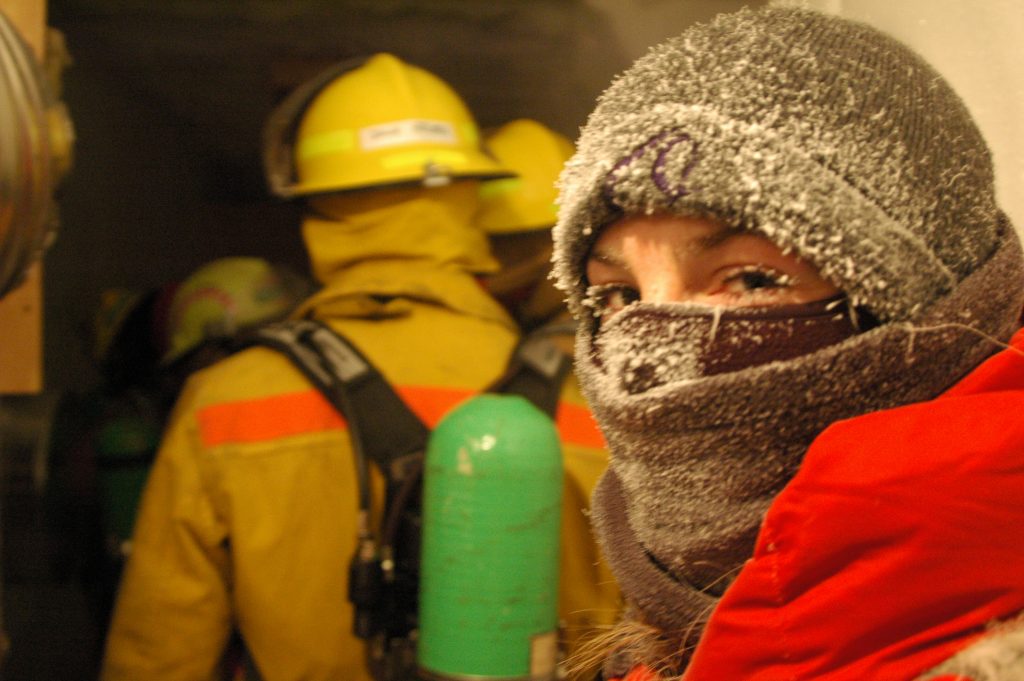
Routine training for the SP Fire Brigade

Things are really swinging here at the Pole now. I've joined the South Pole Station Fire Brigade and we've had a few fire alarms, but no fires thank goodness. I'm working in the station greenhouse. And oh yes, there's still plenty of snow shoveling. But the shoveling has declined as other projects start to demand more labor.

Last week we had a change in the weather. The winds shifted about 30 degrees and picked up speed. From what I gathered from the meteorologists, a low pressure system formed or moved into the Weddell Sea and due to the lay of the Trans-Antarctic Mountains, it influences our weather. Opposite the Weddell Sea from us, a high pressure system started flowing towards the low pressure system and we were caught right in the middle of the exchange. That exchange included a fairly constant 25 knots of wind with peaks up to 32 knots. I was assigned to work outside in the Dark Sector that day, and it was glorious.

In this update: Windy Work, Fire Brigade, Fire Alarms, Greenhouse (growth chamber), Job Update.

Full Story


Buried Antarctic Aircraft
South Pole, Antarctica, AQ
27 November 2005

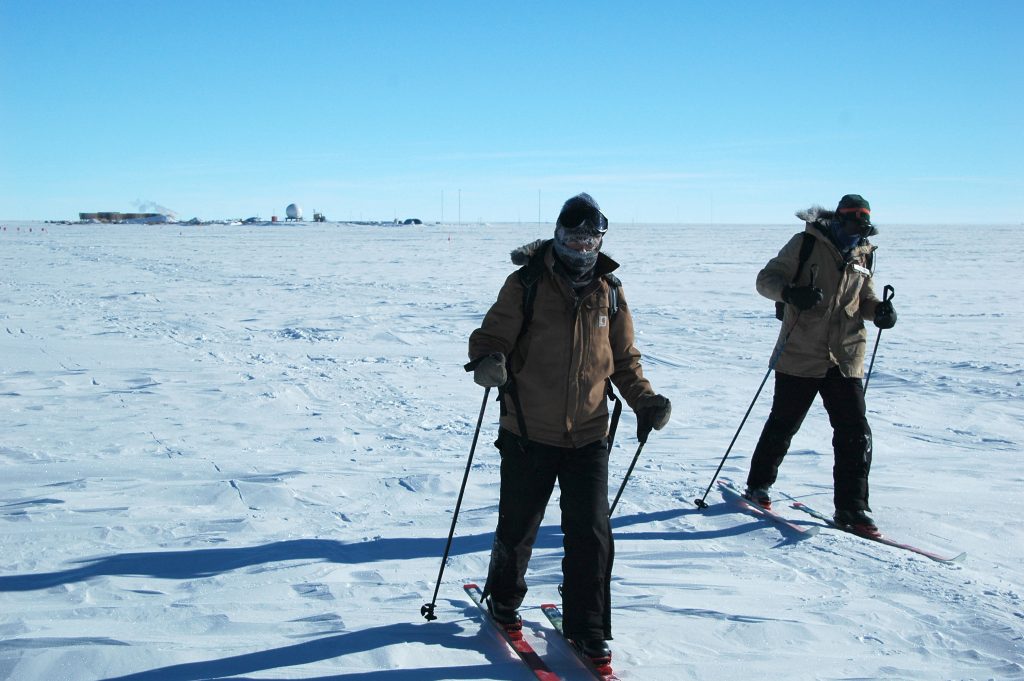
Kari and Mike ski across windswept Antarctica

Here at the Pole, we celebrated Thanksgiving on Saturday. And by celebrate, I mean with a big turkey dinner, we got the day off from work and consequently, our first two-day weekend of the season.

But I'm not writing to tell you how amazing the food was, how interesting it was to see everyone dressed up (relatively speaking - these are people I normally see in heavy work overalls, huge jackets, and frost-covered face masks, neck gaiters and goggles). Nor is this about the dance party that ensued after I had a nice long sit watching a movie (because we can't get any football games on TV).

This is a story about the next day. The day I partook in my first off-station Antarctic expedition.

Many years ago, one of the transport aircraft had a bad day here and could not fly home. Instead of taking the time and effort to disassemble the aircraft and ship it, they just towed it beyond the end of the skiway and left it there.

Full Story


Snow Stakes Run
South Pole, Antarctica, AQ
11 December 2005

South Pole Snowmobiling

Since 1990 the meteorological (MET) department has made an annual journey to measure how much snow drift has accumulated over the previous year. About half a dozen "snow stake lines" radiate 20 kilometers out from the station in all directions to get away from the swirling influence of the buildings and other structures that cause wind eddies and such that skew the way snow drift accumulates.

Because this is such a unique opportunity to get off and far away from the station the MET department invites anyone to come join them. To accommodate these extra people, they take one of the Piston Bully personnel carriers to go out into the great expanse of the polar plateau to measure the snow stakes.

The weekend I was scheduled to go, both Piston Bullies were in the shop and out of order. The measurements still have to be taken so the MET department just takes snowmobiles instead. Although two people can fit on a snowmobile they require each person to have their own snowmobile for greater versatility in the event of an emergency.

I was told if I could find a snowmobile to use I was welcome to come along. The science support department was gracious enough to let me take one of their machines and off we went, blazing toward the distant Antarctic horizon measuring snow.

Full Story


Happy Camper School
South Pole, Antarctica, AQ
17 December 2005

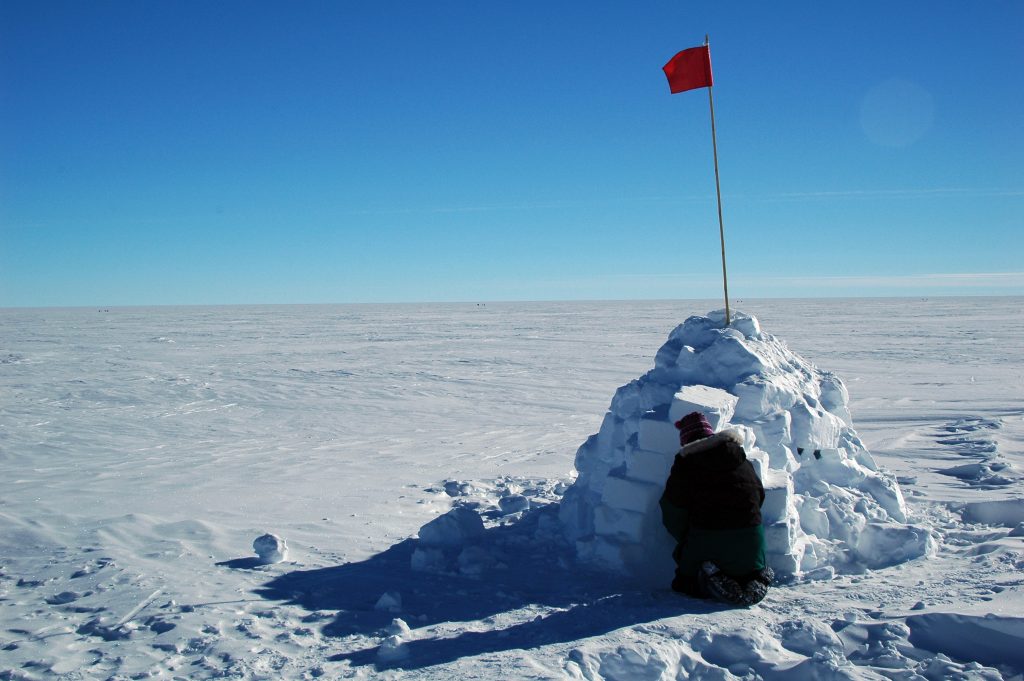
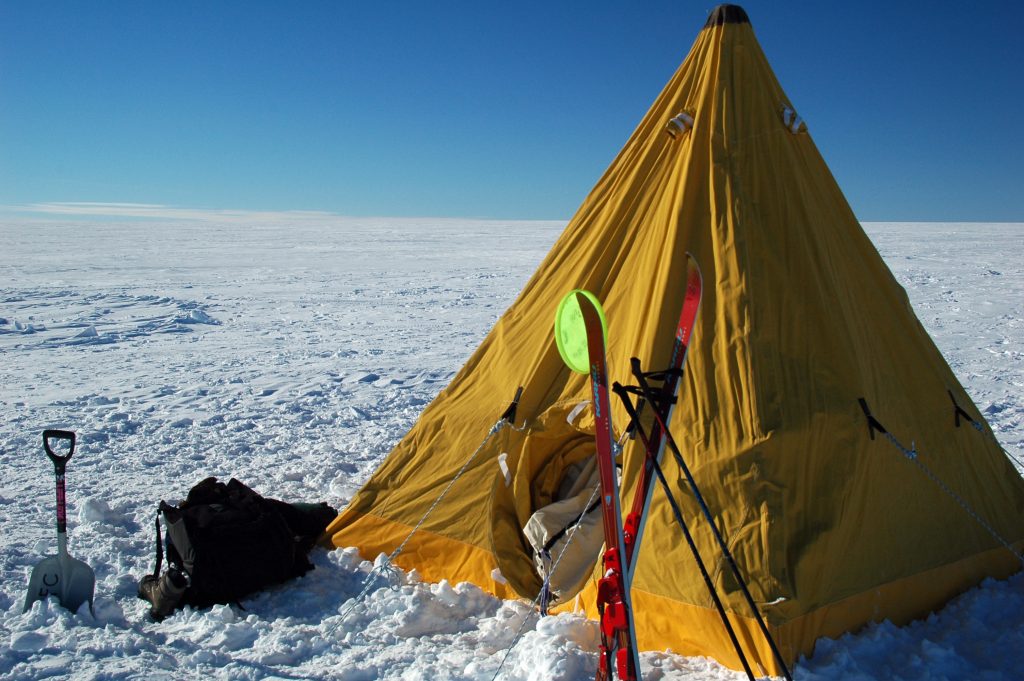
A Scott polar tent: home.

It was our weekend of Antarctic car camping. An instructor came up from McMurdo to take a group of us "Polies" out into the Great White Nothing to go camping for a night.

We started off with a classroom session on Friday night to get the basics on keeping warm, avoiding hypothermia and other 'winter' camping skills. Then, Saturday after work and dinner, we gathered and loaded up our ride out to the campsite in the middle of the Antarctic Plateau.

Actually, not everybody rode the "Piston Bully," a personnel transport on tracks. Chris and I decided it would be fun to ski. Somehow skiing to camp heightened the adventure of the experience.

Full Story


Buried Aircraft Found
South Pole, Antarctica, AQ
24 December 2005

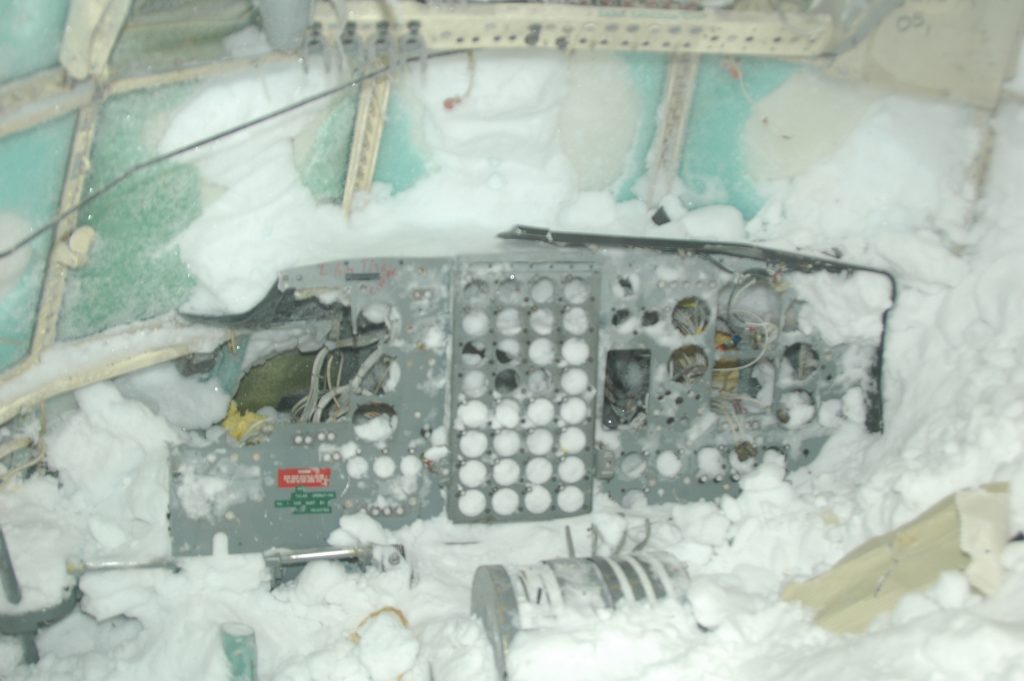
Inside The Buried Cockpit

The wreckage of Skier 917 has been found. It took the effort of many, but we've reached the goal of crawling down through the escape hatch into the buried plane. Every one who visited the wreck site took at least three hours of their free time per visit skiing or walking out to the site, climbing down into a five-meter snow hole and hauling out a few buckets of snow. That's a true group achievement.

Two days before Christmas Kris from the meteorology department and I skied out there to check it out. No one had visited the site in some time so a few inches of snow drift had accumulated on the sheets of plywood covering the access hole.

After a little more digging and cleaning up around the edges, Kris handed up the hatch cover and disappeared into the perfectly round hole and entered the cockpit.

Full Story


Pole Position
South Pole Station, Antarctica, AQ
31 December 2005

Flamethrowers... Ok.

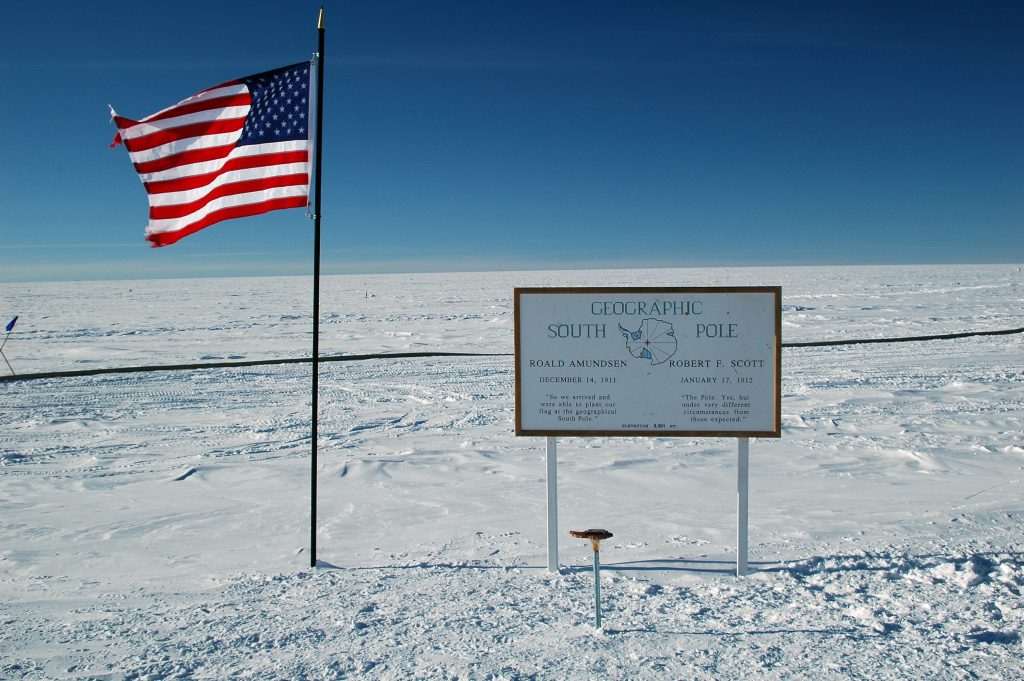
Life at the pole has become routine. From the outside, it might seem that being at the South Pole could be anything but routine. But when you live and work here... much less work nine hours a day and six days a week, it does eventually just become where you live and work. Granted, it does dawn on me every now and then that I am right on the axis of the earth, and that is still very cool.

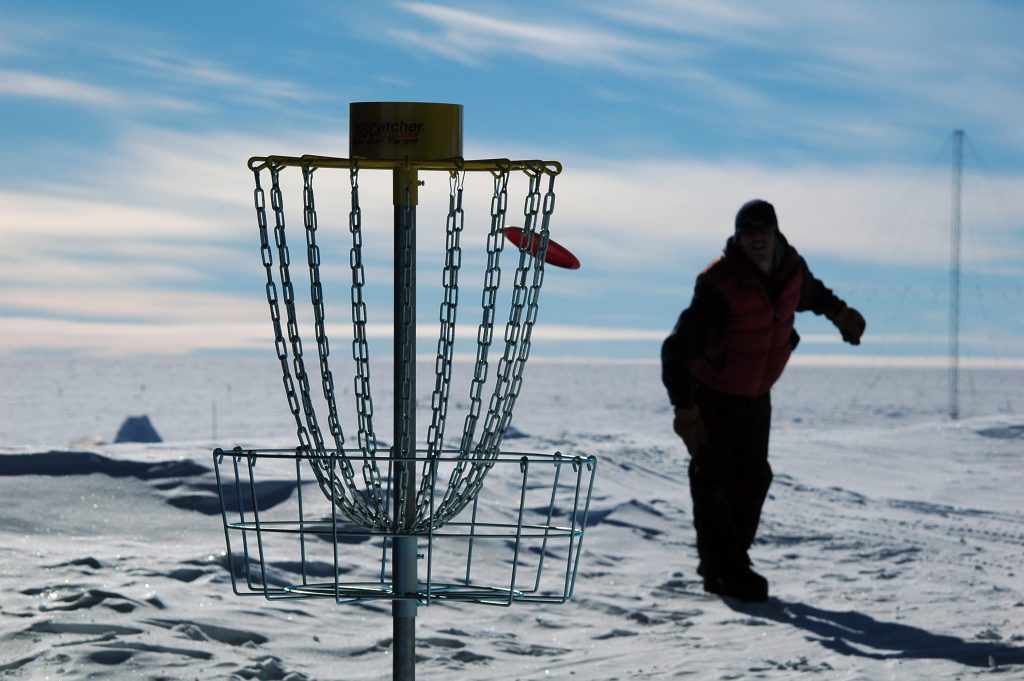
We do make occasional use of the pole with our recreational activities. Like on Christmas Day we have the annual Race Around The World. As long as one defines going around the world as crossing every line of longitude, then that's just what we did.

Full Story


Pole Out
South Pole, Antarctica, AQ
23 January 2006

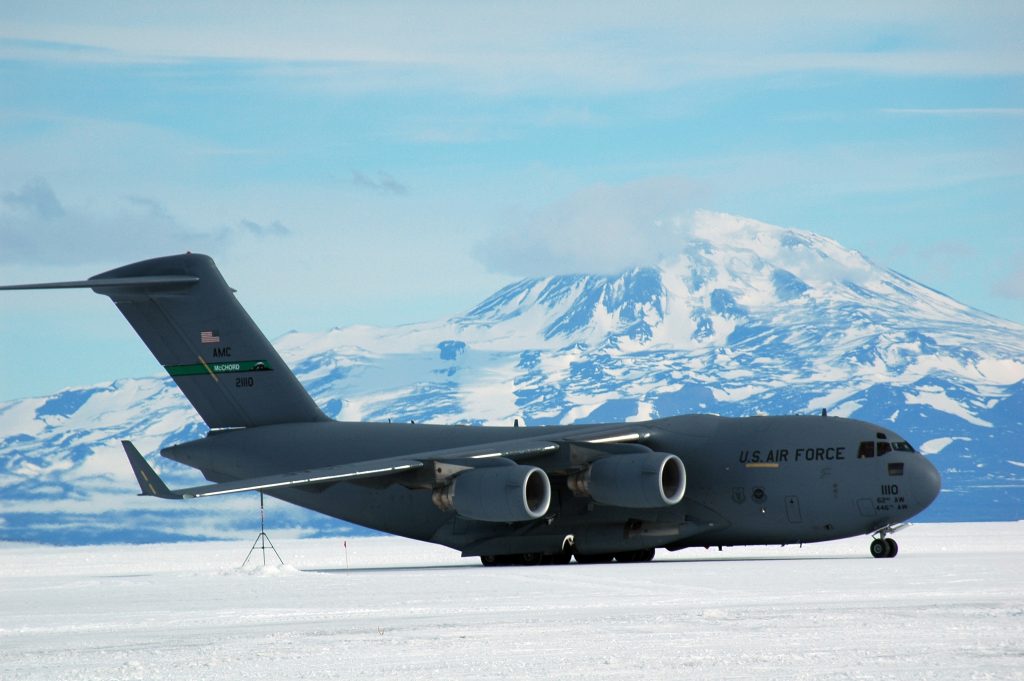
C-17 Globemaster III

Returning to the vibrant land of color was a re-awaking process like I've never experienced before. It all started when I deplaned in Christchurch, New Zealand. I had stepped onto a massive C-17 Globemaster III military transport aircraft in the stillness of McMurdo Sound on the Antarctic coast and off it into a foreign world of warmth, darkness, sweet aromas and a light spattering of rain.

Knowing it would be warm when I arrived, I wore shorts under the heavy Antarctic clothing. Peeling off the layers as soon as I was on the tarmac waiting for the shuttle bus to the terminal felt glorious. The warm moist air enveloped me, light drops of rain tingled my skin and my sense of smell felt keener than ever. Even darkness took on a new fascination. The stars, having been hidden from me by 24 hours of sunlight a day at the pole, were partially obscured by scattered clouds and the light pollution of the city, but they were more beautiful than I could have imagined. It was approaching midnight but I was totally wired with all these sensory stimulations that had lain dormant since I flew south three months ago, all the way south.

Full Story


Castle Rock
Ross Island, Antarctica, AQ
24 January 2006

Castle Rock

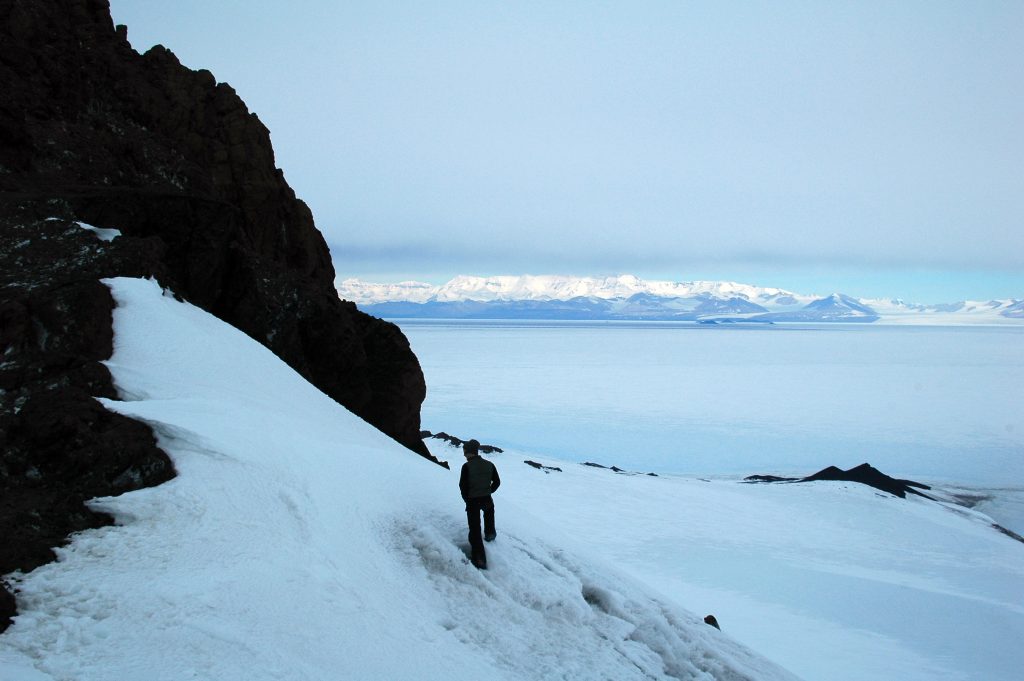
Stepping off of the ski-equipped LC-130 Hercules aircraft at Williams Field on the Antarctic coast after the three hour flight from the Pole, the first thing I noticed was how the warmer snow felt under my feet. It was nearly 40 degrees below zero (conveniently that is where the Fahrenheit and Centigrade scales are equal) when I boarded the plane at the pole. I didn't think much of how the snow felt under my feet, or what it sounded like. The squeaking crunching sound had been there all season. But when I set foot on the warmer costal snow, where it was right about freezing, the snow felt very different - soft and creamy.

Four of my polie co-workers and I, plus a dozen scientists from the pole were on our way back to the land of green. Our first stop was a night in McMurdo. Not long after us, people leaving the pole will be able to fly straight through without an overnight layover in McMurdo. Instead of getting a ride to the base like we did, they would simply get off of the smaller ski-equipped LC-130 and be shuttled from the softer snow 'skiway' to the harder ice runway where the huge wheeled C-17 Globemaster III will whisk them straight to Christchurch, New Zealand.

Full Story


Click for Saint Louis, Missouri Forecast

Snaps!

Click image to post a comment!

Off Yonder
Adventure Dispatches

Receive Off Yonder e-mail dispatches. This includes stories that will be posted at offyonder.com and newsy tid-bits that won't.
(more info)

offyonder.com
update notifications

Receive an e-mail notice with a link to offyonder.com when updates are posted.

 
Web offyonder.com

Nepal Abroad Web Site

| Home || Story Index || Links || China || Japan || OZ/NZ || Nepal || South Pole || Air || Snow || Water || Earth ||| RSS

Photography: Assignment - Expedition Documentation - Stock Images - Fine Prints - Product Lifestyle/Marketing